Vinyl Sheet Flooring: The Unsung Hero of Healthcare and Hospitality Spaces
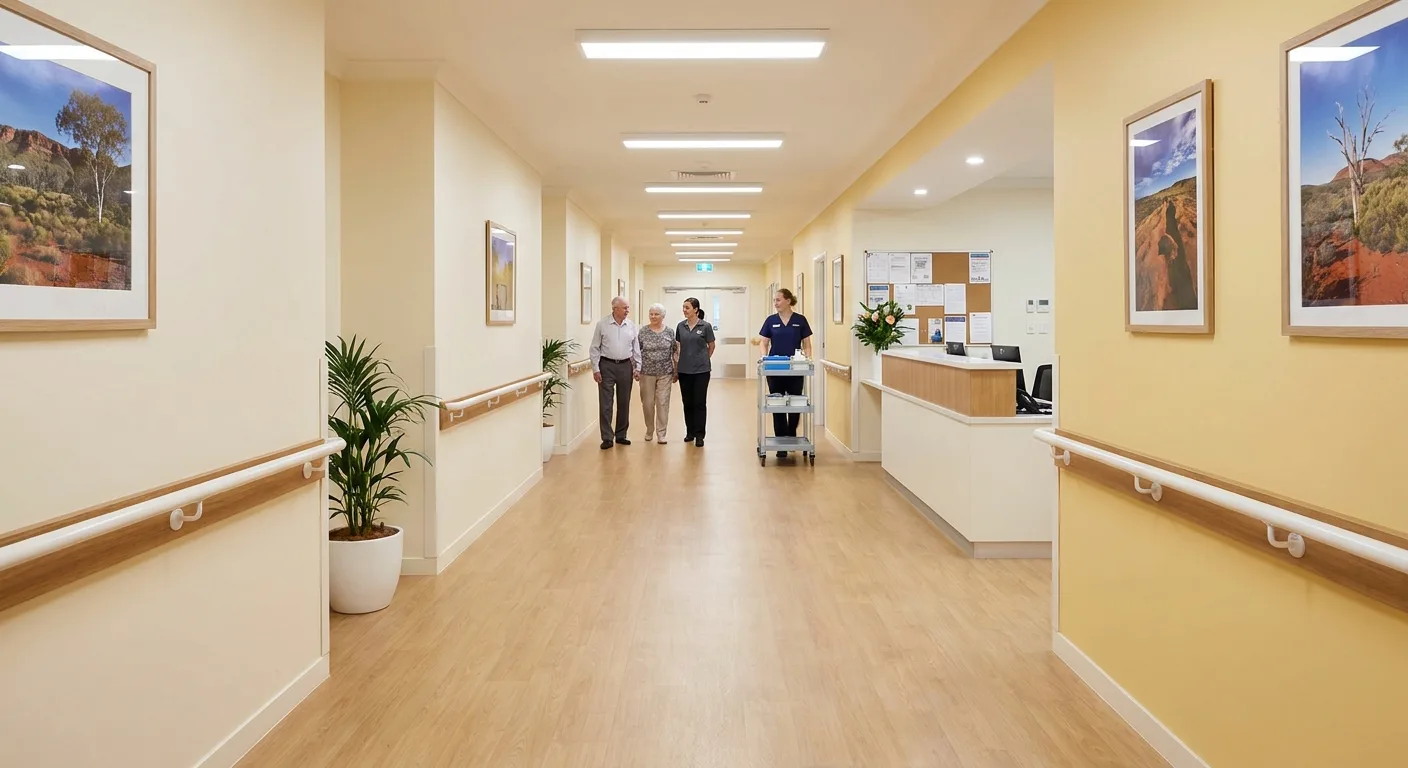
Key Takeaways
- Vinyl sheet flooring creates a near-seamless surface that prevents bacteria, moisture, and contaminants from penetrating joins — making it the healthcare industry standard.
- Heat-welded seams are the critical detail. They fuse the sheet edges into a continuous waterproof surface.
- Modern vinyl sheet comes in a wide range of designs, moving well beyond the clinical look of older products.
- It is typically 20 to 40 per cent cheaper than epoxy resin for areas where a resin system is not required, while delivering comparable hygiene performance.
Introduction
Vinyl sheet flooring does not get the attention it deserves. It lacks the visual drama of engineered timber, the marketing presence of luxury vinyl plank, and the industrial credibility of epoxy resin. It quietly goes about its business in hospitals, aged care facilities, hotels, commercial kitchens, childcare centres, and food service operations across Australia.
And it does that business exceptionally well.
Vinyl sheet flooring is specified for these environments because it solves a specific problem that other products cannot: it creates a continuous, waterproof, hygienic surface over large areas with minimal seams. Where joins are necessary, they are heat-welded into a permanent bond that is as waterproof as the sheet itself.
This guide explains why vinyl sheet is the right choice for healthcare and hospitality, how it compares to alternatives, and what to consider when specifying it for your project.
What Makes Vinyl Sheet Different
Vinyl sheet flooring is manufactured in rolls, typically 2 metres wide. It is laid in sheets across the floor with seams that are heat-welded using a specialised tool and matching welding rod.
The result is a floor with almost no places for water, bacteria, or contaminants to penetrate. Contrast this with:
- Vinyl plank/tile: Individual planks or tiles with click-lock or grouted joins that can allow moisture penetration over time
- Ceramic tiles: Grout lines that trap bacteria, stain, crack, and harbour mould
- Carpet: Absorbs moisture and contaminants, cannot be fully disinfected
For environments where infection control, hygiene, or waterproofing is a primary concern, vinyl sheet’s near-seamless construction is its defining advantage.
Healthcare Applications
Hospitals and Medical Centres
Australian healthcare facilities must meet stringent infection control standards. Flooring plays a direct role in infection prevention by either facilitating or hindering effective cleaning.
Vinyl sheet flooring is specified in:
- Patient rooms
- Corridors and waiting areas
- Treatment rooms
- Operating theatre ante-rooms (operating theatres themselves often use specialist conductive flooring)
- Pathology and imaging departments
- Staff areas and amenities
The key healthcare requirements that vinyl sheet meets:
- Seamless surface that can be fully disinfected
- Chemical resistance to hospital-grade cleaning products
- Low VOC emissions for indoor air quality
- Anti-static properties where required
- Slip resistance (even when wet with cleaning solutions)
- Comfort underfoot for staff on long shifts
Aged Care
Aged care facilities have additional requirements around slip resistance, wheelchair and walker compatibility, and colour contrast for residents with impaired vision.
Vinyl sheet products designed for aged care typically include:
- R10 to R11 slip resistance ratings
- Smooth surface that does not catch walking aids
- Colour-contrasting options for wayfinding and edge definition
- Acoustic backing to reduce impact noise
- Cushioned backing for reduced fatigue and fall impact
Dental and Allied Health
Dental surgeries, physiotherapy clinics, and other allied health practices need hygienic, professional-looking flooring that handles daily disinfection without deteriorating. Vinyl sheet provides this at a lower cost than many alternatives.
For healthcare businesses in Southeast Queensland, including practices across Brisbane’s southside and Logan, vinyl sheet is the most practical and cost-effective solution that meets clinical standards.
Hospitality Applications
Hotels and Accommodation
Hotel corridors, bathrooms, and back-of-house areas benefit from vinyl sheet’s waterproof and easy-clean properties. Modern products include designs that replicate timber, stone, and decorative patterns, allowing hospitality designers to maintain their aesthetic vision while meeting performance requirements.
Guest room bathrooms are a common application. A heat-welded vinyl sheet floor with coved edges (turned up the wall by 100mm) creates a fully waterproof wet area that is easier and cheaper to install than tiled alternatives.
Commercial Kitchens and Food Service
While epoxy and resin systems are the standard for high-volume commercial kitchens, vinyl sheet is a practical alternative for:
- Cafe and small restaurant kitchens
- Hotel pantries and serveries
- Aged care kitchen facilities
- Canteens and food courts
- Bakeries (where thermal shock is not extreme)
Vinyl sheet handles daily mopping, chemical cleaners, and moderate foot traffic well. It does not offer the same chemical or impact resistance as epoxy, so it is not suitable for heavy industrial kitchen environments. But for the applications listed above, it provides 80 per cent of the performance at 60 per cent of the cost.
Laundries and Amenities
Hotel and commercial laundries, staff changerooms, and amenities blocks are often overlooked in flooring specifications. These spaces are wet, chemically exposed, and heavily trafficked. Vinyl sheet handles all three demands.
The Heat-Welding Process
Heat welding is what transforms vinyl sheet from a good product into a great flooring system. Without it, vinyl sheet would just be large vinyl tiles with fewer seams. With it, the seams become as waterproof and hygienic as the sheet itself.
The process:
- Seam routing: After the vinyl sheet is laid and adhesive has cured, a handheld router cuts a groove along each seam to a precise depth (typically two-thirds of the sheet thickness).
- Welding rod insertion: A welding rod made from the same PVC compound as the sheet is fed through a hot-air welding tool at 350 to 400 degrees Celsius.
- Fusion: The heat melts both the rod and the sheet edges, fusing them into a single continuous surface.
- Trimming: Once cooled, the excess welding rod is trimmed flush with the sheet surface using a specialist trimming tool.
The result is a seam that is structurally integral to the floor, not a gap filled with sealant. It will not crack, peel, or separate under normal conditions.
Heat welding must be performed by trained installers. It is a specialist skill that general flooring installers may not possess. When getting quotes, confirm that the installer has heat-welding experience and the correct equipment.
Coving: Where Floor Meets Wall
In healthcare and food service environments, the junction between floor and wall is a potential contamination point. If the floor stops at the wall with a right-angle join, that corner traps dirt, moisture, and bacteria that are difficult to clean.
Coved vinyl sheet solves this by turning the floor material up the wall by 75 to 150mm, with a curved profile at the junction. This eliminates the sharp corner and creates a continuous cleanable surface from floor to wall.
Coving is essential in:
- Operating theatres and treatment rooms
- Commercial kitchens
- Aged care bathrooms
- Childcare wet areas
- Any space where infection control or hygiene is critical
The coving process uses heat to bend the vinyl sheet around a pre-formed cove strip installed at the floor-wall junction. The top edge is sealed with a cap strip or sealant.
Product Selection
Vinyl sheet products vary significantly in quality, performance, and suitability. Key specifications to check:
Wear Layer
- Standard commercial: 0.5mm — suitable for offices and light commercial
- Heavy commercial: 0.7mm — suitable for healthcare corridors and hospitality
- Premium: 1.0mm+ — suitable for high-traffic healthcare and food service
Backing
- Standard PVC backing: Good general performance
- Foam backing: Provides acoustic insulation and underfoot comfort (preferred for aged care and hospitals)
- Fibreglass reinforced: Enhanced dimensional stability (prevents expansion and contraction)
Slip Resistance
Different areas require different slip ratings. Ensure the product meets the requirements for your specific application:
- R9: Dry areas (offices, corridors)
- R10: Areas with occasional moisture (hospital rooms, hotel corridors)
- R11: Wet areas (bathrooms, laundries)
- R12: Very wet areas (commercial kitchen dish-washing zones)
Cost Comparison
| Flooring Type | Installed Cost (per sqm) | Hygiene Rating | Maintenance Cost |
|---|---|---|---|
| Vinyl sheet (heat-welded) | $40 - $85 | Excellent | Low |
| Epoxy resin | $60 - $150 | Excellent | Very low |
| Ceramic tile (with grout) | $50 - $120 | Good (degrades over time) | Medium |
| Luxury vinyl plank | $55 - $110 | Good | Low |
| Vinyl sheet (no welding) | $35 - $70 | Moderate | Low |
Vinyl sheet with heat-welded seams delivers hygiene performance comparable to epoxy at a significantly lower installed cost. For areas that do not require epoxy’s chemical and impact resistance, it is the most cost-effective hygienic flooring option.
Maintenance
One of vinyl sheet’s practical advantages is low maintenance.
Daily:
- Sweep or dry mop to remove loose debris
- Damp mop with a pH-neutral cleaner or hospital-grade disinfectant (as required)
Weekly:
- Machine scrub with a rotary floor machine and appropriate cleaning solution
- Inspect seams and edges for any lifting or damage
Periodically (every 6 to 12 months):
- Strip and re-apply floor polish (if using a polished system)
- Or buff and restore (for PUR — polyurethane reinforced — finishes that do not require polish)
Modern PUR-finished vinyl sheet products significantly reduce ongoing maintenance. The factory-applied polyurethane surface resists staining and scuffing without needing regular polish application. Over a ten-year period, the labour savings from a PUR finish often exceed the premium paid for the product.
Preparation Requirements
Like all commercial flooring, vinyl sheet requires a properly prepared subfloor. Because vinyl sheet is thin (typically 2 to 3mm), it is less forgiving of subfloor imperfections than thicker products like LVP or carpet tile.
Professional floor preparation is essential. The subfloor must be:
- Flat to within 2mm in 3 metres (stricter than most other products)
- Clean and free of contaminants
- Dry (moisture tested and within manufacturer limits)
- Primed with a compatible primer
Any bump, ridge, or contamination in the subfloor will telegraph through the vinyl sheet surface. There is no wear layer thickness to hide imperfections. Preparation quality is visible in the finished floor.
Conclusion
Vinyl sheet flooring is not the most exciting flooring product. It does not win design awards or attract attention on social media. But it is the product that keeps hospitals hygienic, aged care facilities safe, hotel bathrooms waterproof, and commercial kitchens compliant.
For any space where seamless hygiene, waterproofing, and ease of cleaning are priorities, vinyl sheet with heat-welded seams is the benchmark. It delivers clinical-grade performance at a practical price point.
Need hygienic flooring for a healthcare or hospitality project? Suelo Flooring installs heat-welded vinyl sheet across Southeast Queensland, including Brisbane’s southside, the Northern Gold Coast, Logan, and Ipswich. Contact us for a specification consultation and quote.
Related Articles:
Suelo Flooring
Suelo Flooring delivers specialist commercial flooring across Southeast Queensland. An experienced, dedicated team manages every project from consultation to handover.
About Suelo Flooring